What happened to Data Day Texas, and why are we launching the Data AI Weekend?
Read about the evolution of Data Day Texas
Data AI Weekend is heavily curated. This is not about sitting in an audience. We want you to reconnect with friends - and meet with the people who will make a difference.
Austin is where Data Day Texas started, and it is where the next thing starts too.
Data AI Weekend
October 10-11, 2026. Austin.
AT&T Hotel and Conference Center
Take advantage of the early bird pricing.
Register at Eventbrite
Featured Speakers Animateurs
many more to be announced
(what is an animateur?)
Scott Haines

Scott Haines (Linkedin / Substack) calls himself a reluctant data engineer. It started with video games - then taking apart the family stereo to see how it worked - then writing the backend Java APIs and the real-time ranking engine behind Yahoo Games. (with a few more steps in between)
An early Spark user, Scott drove its adoption with Twilio's Voice Insights team, building stream and batch platforms handling tens of billions of messages a day. As a Distinguished Software Engineer at Nike, Scott's team collapsed 52,000 clickstream event types down to 133 and took the pipeline bill from $4,000 a day to $16. Currently, Scott is a Staff Developer Advocate and OSS Engineer at Databricks - the perfect home for a Spark OG, where he supports Unity Catalog, Delta Lake, Iceberg, and of course - Spark.
A longtime author, Scott most recently co-authored Delta Lake: The Definitive Guide (O'Reilly)
Check out some of Scott's recent interviews and presentations:
From Data Pipelines to AI Agents: Engineering the Future of Intelligent Systems (O'Reilly)
4 Lessons Learned the Hard Way and How Thinking Small Saved the Day (MotherDuck)
Scott Haines on the Future of Data Engineering (DataEngineeringDan)
Scott will host the following Data AI Weekend sessions:
What does Openness in Open Source mean nowadays?
The Future of Distributed Data Systems
Bill Inmon
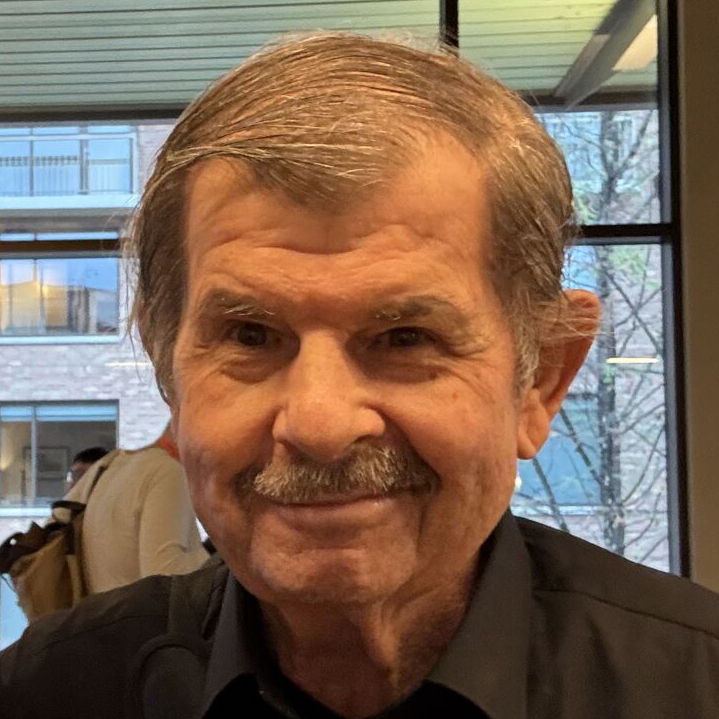
Bill Inmon (Wikipedia / LinkedIn) is an American computer scientist, recognized by many as the father of the data warehouse. Inmon wrote the first book, held the first conference, wrote the first column in a magazine and was the first to offer classes in data warehousing. Inmon created the accepted definition of what a data warehouse is - a subject oriented, nonvolatile, integrated, time variant collection of data in support of management's decisions. Bill is among the most prolific and well-known authors in the big data analysis, data warehousing and business intelligence arena. In addition to authoring more than 50 books and 650 articles, Bill has been a monthly columnist with the Business Intelligence Network, EIM Institute and Data Management Review. In 2007, Bill was named by Computerworld as one of the "Ten IT People Who Mattered in the Last 40 Years" of the computer profession.
Bill will host the following Data AI Weekend session: Getting Business Value From AI : pt 2 / AMA
Bill will also host the following workshop: Getting Business Value From AI : A Workshop
Kierra Dotson (Provocateur)
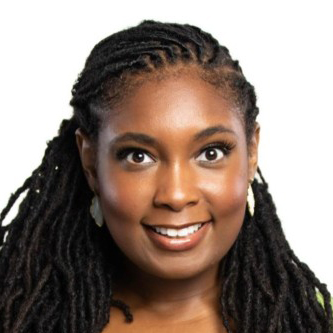
Kierra Dotson (Linkedin / Substack) first joined us at Data Day Texas 2025 - apparently, it was her first data conference. By the end of the event, it was evident to many that she was not only an Animateur - but a Provocateur as well. How could we not invite her back as a speaker for DDTX26?
It's difficult to write a brief bio for Kierra, as she has packed so much into the first decade of her career. Before graduating from UT Austin in CS, she had already logged internships in software engineering, Android development, and the HR analytics work at Visa that pulled her into data before she knew to call it that. After graduation, Visa kept her on as a data engineer.
Then came seven years at IBM Cloud. She worked on Key Protect, its encryption service. When the team's technical writer left, she filled in for six months and wrote one of IBM's first pieces on quantum computing. Then DevOps and SRE. Then, after a reorg, the Kubernetes control planes under 58 critical cloud services - thousands of clusters. On the side, on nights and weekends, Charles Schwab and Chewy hired her to architect what she'd built at Visa.
Then AI. Six months as an AI engineer in IBM Client Engineering - Fortune 500 clients, Verizon among them. And now, Further, a data, cloud, and AI company, where she is Director of AI Strategy & Governance.
Governance as code came out of a conversation with Juan Sequeda at Data Day Texas 2025. Take the policies out of the PDFs. Put them in YAML, under version control. Let the pipeline enforce them. At the same event she asked a room of engineers how many had read the NIST frameworks - blank stares. Her answer: engineers have to become strategic engineers. Juan says that's a t-shirt.
Layoffs. Nobody sure which skills to bet on, or which way to jump. Kierra keeps moving - and keeps telling everyone else how she does it. Talks, interviews, mentoring. She also runs The Data Bloq, a career advisory practice. She is what Data AI Weekend is for.
Check out Kierra's interviews on Catalog and Cocktails, Day in My Tech Life, and Hacker Proof HQ. Good stuff. But she's someone you want to be in the room with - connect with her at Data AI Weekend.
Kierra and Ivo Sokolov will co-host the following Data AI Weekend session: Between the Strategy Deck and the Invoice: Data Platform and AI Economics for 2027.
Karl Ivo Sokolov (Underwriter)
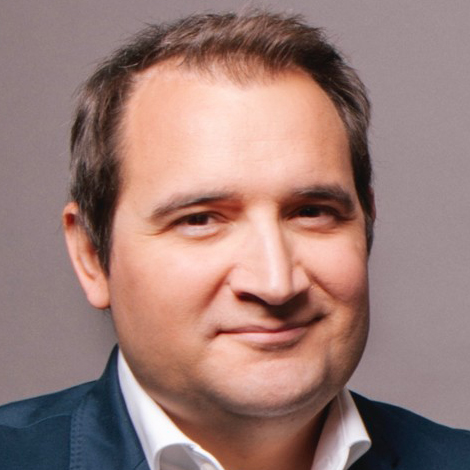
Karl Ivo Sokolov (LinkedIn / Substack) goes by Ivo. He started as a software developer. Then Deloitte - data analytics and forensics. Then managing director and division head at an Austrian bank, running the data office, where he built one of the first compliant cloud data warehouses for a eurozone systemically relevant bank - and helped found the European Cloud User Coalition, a group of European banks trying to get regulators to agree on what a cloud actually is.
Today Ivo is managing partner at Specific-Group in Vienna, where he built the Data & AI practice from zero to more than 40 people - with delivery hubs in Lithuania, Poland, Hungary, Slovakia, and Valencia. He's a Certified Management Accountant and sits on the Global Board of IMA, the Institute of Management Accountants. He is co-author of Finance-Grade Data & AI Products: The VANE Loop Framework.
Vienna is a museum, Ivo likes to say. He'd like to keep it that way. Just not the IT departments.
Check out Ivo's Specific Data & Strategy show on YouTube. It's a good place to see Data Day Texas alumni whom you might have missed - like Sol Rashidi, Chris Tabb, Veronika Durgin, Ole Olesen-Bagneux, Lisa Cao, Paul Dudley, and Shachar Meir. Good stuff.
Ivo and Kierra Dotson will co-host the following Data AI Weekend session: Between the Strategy Deck and the Invoice: Data Platform and AI Economics for 2027.
Matt Housley
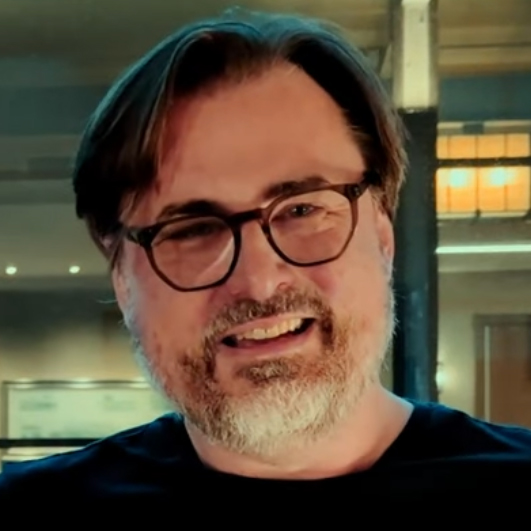
Matt Housley first joined us at Data Day Texas 2023 - our first full post-COVID edition. He and Joe Reis co-hosted the first Data Town Hall, having just co-authored Fundamentals of Data Engineering - which is well on its way to becoming the Dark Side of the Moon of Data Engineering books.
Matt's backstory is short. PhD in math. Visiting assistant professor at BYU, then Utah. Then data science at Overstock - where the data science worked and the productionizing didn't. That's how he became a data engineer. Ternary Data followed, with Joe, where he was CTO for six and a half years. He has been running Halfpipe Systems since 2018.
Matt got into data late enough to see several generations at once - Teradata still in the basement, Hadoop the cool kid, then Spark, Redshift, Snowflake. He says that's why he and Joe could write the book. They weren't in the guts of Hadoop, so they could see the whole thing.
At Data Day Texas 2025 Matt met Tony Baer (Linkedin). Two months later they launched It's About Data - Tony from the analyst side, Matt from the practitioner side, one or two episodes a week. They returned to Data Day Texas 2026 - the Final Edition - to record interviews on site. This turned out to be a massive blessing to the 200+ people who missed Data Day Texas because of the ice storm.
Matt is also the technical editor for Ryan Dolley's forthcoming book on AI and BI (Wiley). He teaches - a data engineering class last fall, O'Reilly training on Data Engineering Workflows.
On the hype, he's steady. Arthur C. Clarke said any sufficiently advanced technology is indistinguishable from magic. Matt's point is that the cracks appeared a while ago and people kept believing anyway. We confuse scale with intelligence. The analyst firms work like the fashion industry - nothing gets invented from nothing, so every new season has to reference a classic. Data mesh comes back as context. Last year was the year of agents. Nobody is running agents in production.
"The more we're in the age of AI and online media, the more face-to-face matters. Yes, I want to read what you have to say. I want to listen to your podcast. But I want to talk to you in person - get an impression, ask questions, break bread."
- Matt Housley
Matt will host the following Data AI Weekend session: Agents of Chaos.
Thais Cooke (Translator)
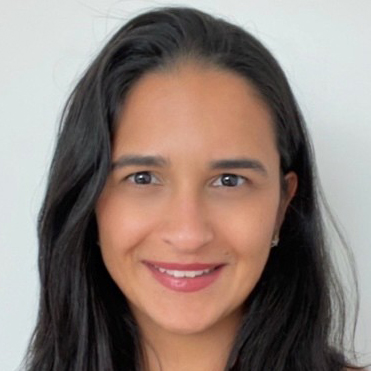
After transitioning from dentistry into data analytics in 2021, Thais Cooke (Linkedin) quickly established herself as a versatile data professional, currently serving as a Senior Data Analyst. Her unique background bridges clinical expertise with analytical thinking, bringing fresh perspectives to data challenges across industries. Thais is the creator of the LinkedIn Learning course: SQL for Healthcare Professionals and an upcoming course on Data Governance with a focus on healthcare.
Thais has shared insights on popular industry podcasts including Data Podcast for Nerds!, Mavens of Data, and How to Get an Analytics Job, and has been featured as a speaker at MDS Fest. Thais is dedicated to making data accessible, focusing on practical solutions that connect technical concepts with real-world applications. When not immersed in datasets and visualizations, Thais can be found buried in books, writing, experimenting with new recipes in the kitchen, or enjoying family time.
Thais will host the following Data AI Weekend sessions:
How can a company measure whether AI is being used well?
Where does AI actually belong in the workflow?
Aaron Black
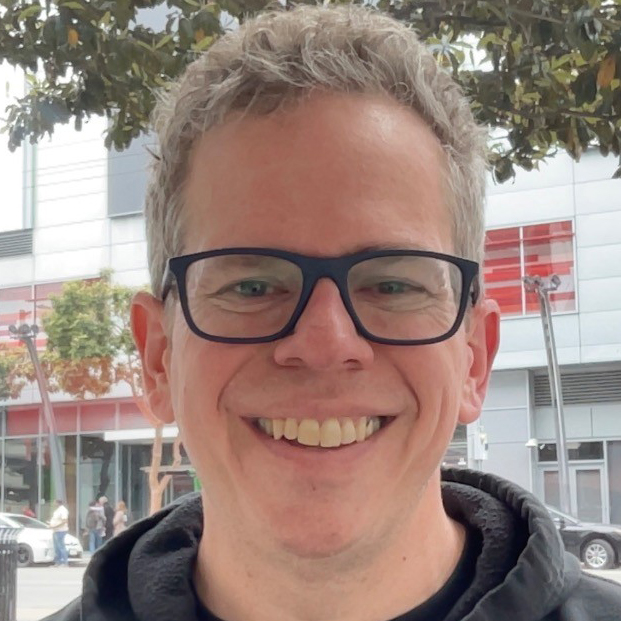
Over the years there has been a chorus from our speakers - many of them O'Reilly authors - asking us to get Aaron Black (Linkedin) - an acquisitions editor at O'Reilly. So in 2026 I asked my longtime O'Reilly friend Marsee Henon - and she helped make it happen. Aaron gave a featured presentation - How To Get Published in Tech. He also hosted an informal discussion AMA session.
Aaron is not the editing kind of editor. He doesn't care about the commas. He's the Jonah Jameson kind - the one who says what the story is, who gets it, when it's due, and who answers for it if the Daily Bugle fails.
Aaron has been in books since 1999. Foreign rights at a literary agency in New York. General manager of a Barnes & Noble in Carmel, Indiana. Then Pearson, then Wiley - For Dummies, WROX, VISUAL - then Apress under Springer Nature, where he rebranded the maker line. Partnerships with Facebook and the Raspberry Pi Foundation. Twenty-seven years.
Ask Aaron where book ideas come from and he'll tell you - it isn't the lone genius in a room. Ideas come from networks - from conversations, corporate use cases, podcast arguments, conference hallways. "It's not inspiration, it's participation."
Aaron will host the following Data AI Weekend sessions:
What does "creation" mean in the age of AI?
What is teaching and what is learning in the age of AI?
Ryan Boyd
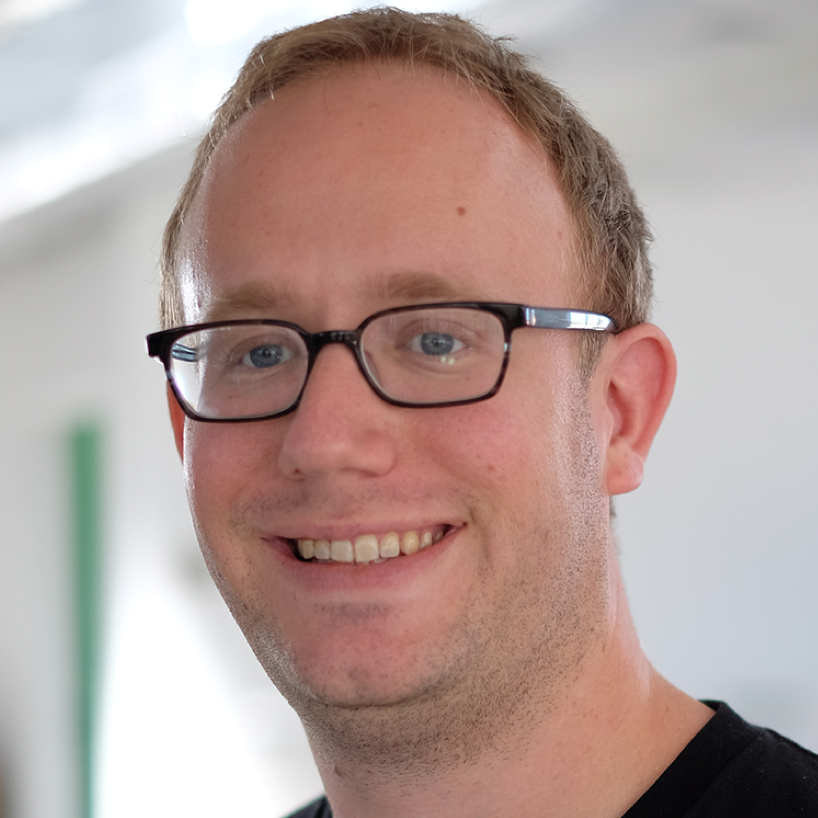
Ryan Boyd (Linkedin / Substack) first joined us at Graph Day 2017, back when he was managing DevRel at Neo4j. Since then, Ryan has shown a knack for landing at cool companies when they are in the process of making things happen - most recently as co-founder of MotherDuck, where he runs developer relations and marketing.
At Google, Ryan helped sell the big data story, and he'll tell you so. The pitch was that your data would outgrow anything you could imagine, and you'd need enormous infrastructure to hold it. The data did grow. Compute and memory and storage grew faster. And the numbers were never what the pitch implied - 95% of BigQuery customers had under a terabyte. Most enterprise warehouses are under a hundred gigs. Redshift published a paper: three hundredths of one percent of queries touch more than ten terabytes.
Ryan's name for the companies that actually have big data is the data 1%, and he corrects himself - it's closer to 0.05%. Everyone else spent a decade buying infrastructure for someone else's problem, and paying for it twice: once to build it, then forever to maintain it, debug it, and read Java stack traces with Python in the middle.
Ryan believes that database people spend their lives optimizing the trip from a SQL query to a result set, but nobody buys a database for that. They buy it to get from a question to an answer. Ryan and his colleagues are focused on shortening that trip.
GlobalDataGeeks are forever grateful to Ryan for helping bring The Duck to Austin.
Ryan will host the following Data AI Weekend sessions:
AI makes us wrong faster. How does that help the business? Who succeeds the most in this environment?
How does data infrastructure need to evolve when agents drive the queries?
Winfried Etzel
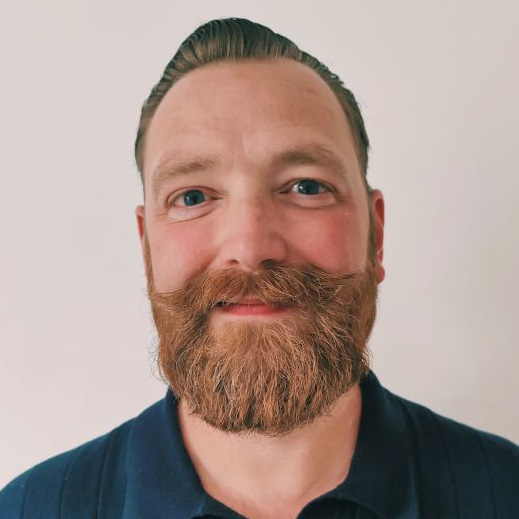
An increasingly prominent voice in the global data community, Winfried Etzel champions Data Governance, Data Strategy, and organizational design. Through his #MetaDAMA podcast and his work building the Nordic data community, Winfried drives professional development across the region. His upcoming book, «Data Governance in the Wild», explores how Data Governance must evolve for distributed landscapes, automation, and AI.
Catch Winfried's insights on the Data Democracy Podcast, Catalog and Cocktails, and his A Journey around the World of Data with Joe Reis.
Alexandra Pasi (Catalyst)
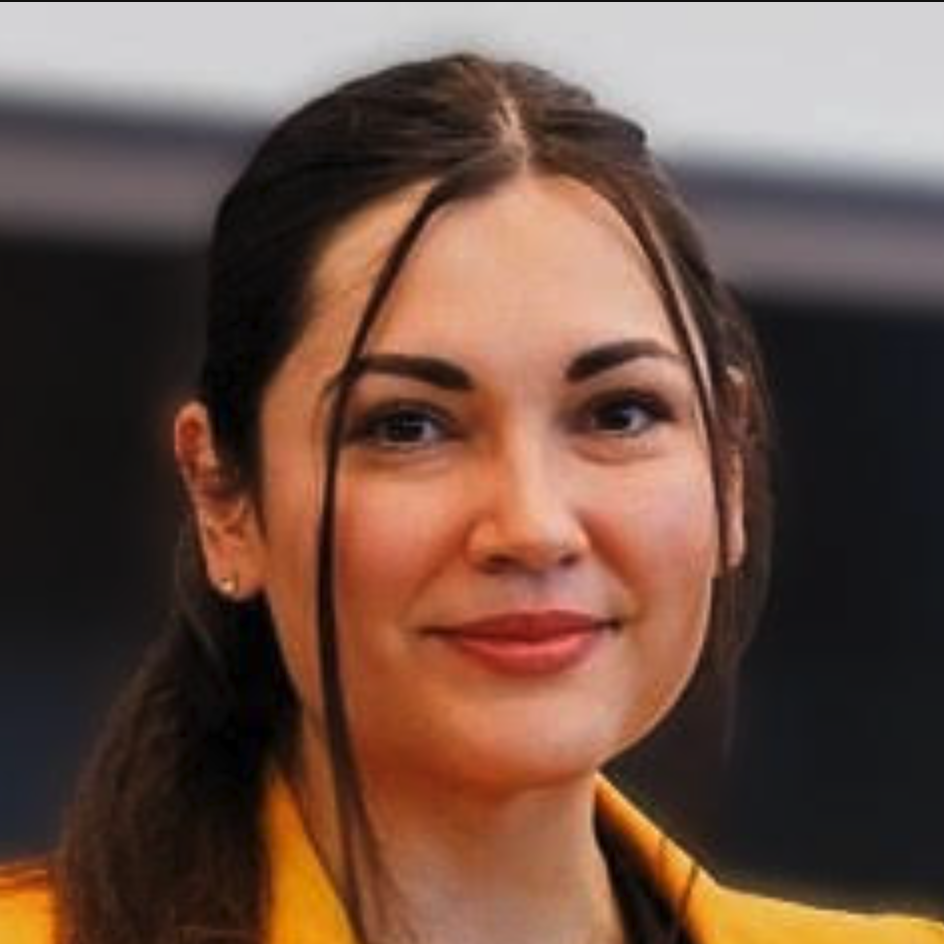
Alexandra (Lexi) Pasi (Linkedin) is the CEO and co-founder of Lucidity Sciences. A mathematician and logician by training, Alexandra has applied that knowledge in a variety of business and technical domains, establishing herself as a dynamic strategist, data leader, and ML innovator. She completed her PhD in Mathematics at Baylor University, receiving the Outstanding Dissertation Award for her interdisciplinary work in logic and formal systems. Her work in machine learning began in 2011, with theoretical and applied research in kernel learning methods. With a group of collaborators, she expanded on that work to develop a novel, general-purpose, highly-scalable ML approach - one which significantly and consistently outperforms state-of-the-art ensemble solutions in accuracy, latency, and compactness. With her team at Lucidity Sciences, she has brought that same technology to market with successful applications in various industries from medicine to finance.
Check out Alexandra's 2024 interview on The Joe Reis Show (spotify), her recent interview on The Applied AI Podcast (spotify / youtube), and her recent interview on Working / Broken (spotify).
Alexandra will host the following Data AI Weekend sessions:
AI as Mathematician: how it works, when it doesn't, and what it means for other disciplines
Culture and technology, a dynamical system: what the hell is even happening anymore?
Juan Sequeda (Synthesizer)
Dr. Juan Sequeda is a Principal Fundamental Researcher at ServiceNow, joining through the acquisition of data.world. He holds a PhD in Computer Science from The University of Texas at Austin. Juan's research and industry work has been on the intersection of data and AI, with the goal to reliably create knowledge from inscrutable data, specifically designing and building Knowledge Graph for enterprise data and metadata management. Juan is the co-author of the book "Designing and Building Enterprise Knowledge Graph" and the co-host of Catalog and Cocktails, an honest, no-bs, non-salesy data podcast. Juan serves as a strategic and innovation bridge across Product/Engineering, Marketing, Sales, and Customer, ensuring technical insights are aligned with business value.
Juan has researched and developed technology on semantic data virtualization, graph data modeling, schema mapping and data integration methodologies. He pioneered technology to construct knowledge graphs from relational databases starting in the mid 2000s, resulting in W3C standards, research awards, patents, software and his startup Capsenta acquired by data.world in 2019. Juan strives to build bridges between academia and industry as former co-chair of the LDBC Property Graph Schema Working Group, member of the LDCB Graph Query Languages task force, standards editor at the World Wide Web Consortium (W3C). Juan continues to be an active member of the scientific community through academic research partnerships, advising students, and member of data and AI scientific conference committees.
Serg Masís
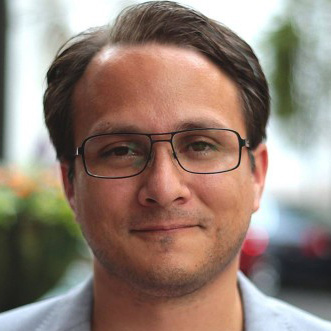
Serg Masís (LinkedIn) is a Climate and Agronomic Data Scientist at Syngenta, a leading agribusiness company with a mission to improve global food security. Whether it pertains to leisure activities, plant diseases, or customer lifetime value, Serg is passionate about providing the often-missing link between data and decision-making. Serg is author of Interpretable Machine Learning with Python, now in its 2nd edition. Serg is also working on two upcoming titles: DIY AI: Step-By-Step Artificial Intelligence Projects for Makers and Hackers, and Building Responsible AI with Python. Learn more at Serg.ai.
Serg will host the following Data AI Weekend sessions:
Who should own an AI agent's memory?
Can smaller models make agents more trustworthy?
Annie Nelson (Facilitator)
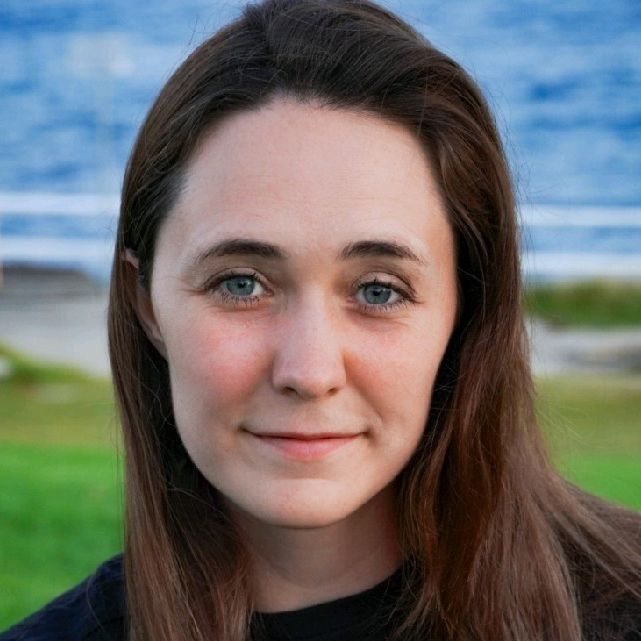
Annie Nelson is a Data Analyst at GitLab, content creator, and author of How to Become a Data Analyst. She has a background in psychology, and was previously a nanny and an occupational therapist before teaching herself data analytics and switching careers. Annie now creates content about data careers, when she's not working, traveling, or spending time outdoors.
Check out her interview with John David Ariansen on the How to Get an Analytics Job Podcast, and her YouTube channel: Annie's Analytics.
Annie will host the following Data AI Weekend session: Does your reporting data layer live in 5 different tools?
Matthew Mullins
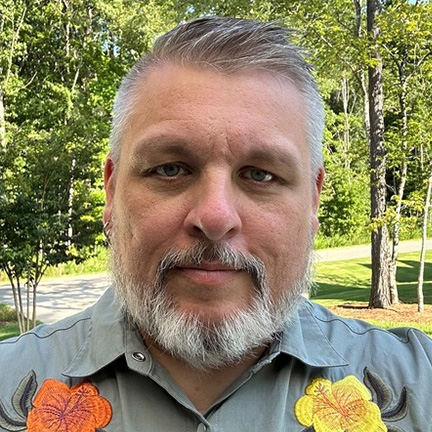
Matthew Mullins (Linkedin) has spent over 20 years at the intersection of government and enterprise, building and delivering data solutions that drive informed decision-making. Currently CTO and co-founder at Coginiti, the collaborative data operations platform, Matthew leads the product and engineering teams. With deep expertise in data strategy, analytics, and technology implementation, he has helped organizations harness the power of data to solve complex challenges. If he's not solving data challenges, you'll find him floating or standing in a river fly fishing.
Matthew will host the following Data AI Weekend sessions:
Will the real semantic layer please standup
Hot take, the only data migration that makes sense is to Apache Iceberg, but what comes next after you've chosen your storage layer?
Tim Frazer

Tim Frazer was working in a grocery store in Vancouver, doing logistics and operations, when he found himself at a gathering of biostatisticians and watched one of the pioneers of Python demonstrate what a package could do. He remembers the thought exactly: he could stop treating his spreadsheets as the work and start treating them as inputs. He had been automating them out of impatience for years without knowing that was a job.
He is homeschooled and self-taught - no computer science degree, no bootcamp - and he got there through books, ERP systems, kitchens, and asking a great many questions. A few years later he talked his way into a role at a New York startup by learning Ruby on Rails fast, noticed the data team next door solving more interesting problems, and discovered there was a title for what he had already been doing. Today he is Director of Data Engineering & Analytics at Trust & Will, running a lean team and leading a migration to an Apache Iceberg lakehouse. He tends to get called in when a data team or platform is struggling to keep up, or doesn't know where to start.
Tim thinks about architecture the way he thinks about a plate - the ingredients, how they come together, and the fact that too many spices ruin it. He writes about the self-taught path at Self-Taught Engineer, taught data and Python at BrainStation for three years, has coached well over a hundred engineers and analysts, and still mentors someone new most weeks.
Tim will host the following Data AI Weekend sessions:
If AI stops us breaking things, where does judgement come from?
If AI eats the junior work, how does anyone get in the long way round?